INDUSTRIAL DESIGN · FICTIONAL SKILL SHOWCASE

Evidence before aesthetics.

Modular Desk Lamp

A demonstration of how the Skill separates concept intent, generated imagery, assumptions, and engineering proof.

PROJECT 01 · CONCEPT PROPOSITION

01

A light that changes role, not identity.

Concept intent: one repairable platform for task light, call light, and compact storage.

E0 · Fictional demonstration · To validate

PROJECT 01 · BRIEF

Reduce replacement by separating what wears, moves, and emits light.

USER

Assumption: people working in compact home spaces.

ROLE

Fictional concept direction and portfolio demonstration.

TIME

Illustrative case; no real project timeline.

CONSTRAINT

Small footprint, reach, stability, service access.

All claims E0No user researchNo engineering review

SYNTHETIC SCENARIOS

Three behaviors to investigate—not findings.
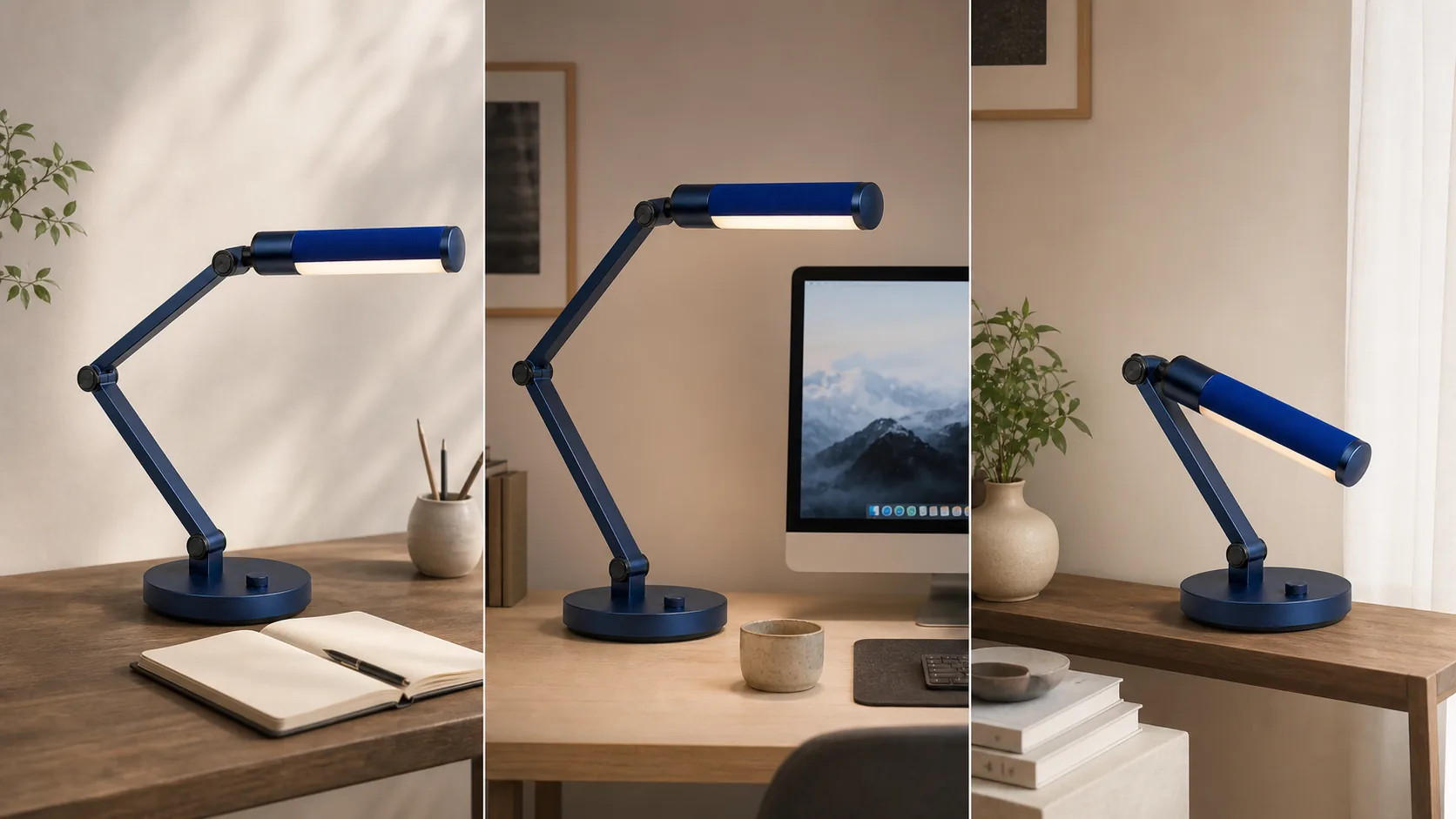
Synthetic task-light scenario with the modular lamp over a notebook
E0 · Assumption: task work may require low, directed light.
Synthetic video-call scenario with the modular lamp beside a monitor
E0 · Assumption: calls may require a second lighting position.
Synthetic compact-desk scenario with the modular lamp folded down
E0 · Assumption: desk depth may constrain the footprint.

AI-assisted concept visualization · Not research evidence

PROVISIONAL INSIGHT · TO VALIDATE

The light source may need to move between modes while the base stays familiar.

This is a design hypothesis derived from synthetic scenarios—not an observed user need.

CONCEPT DIVERGENCE

Change the architecture, preserve the product language.
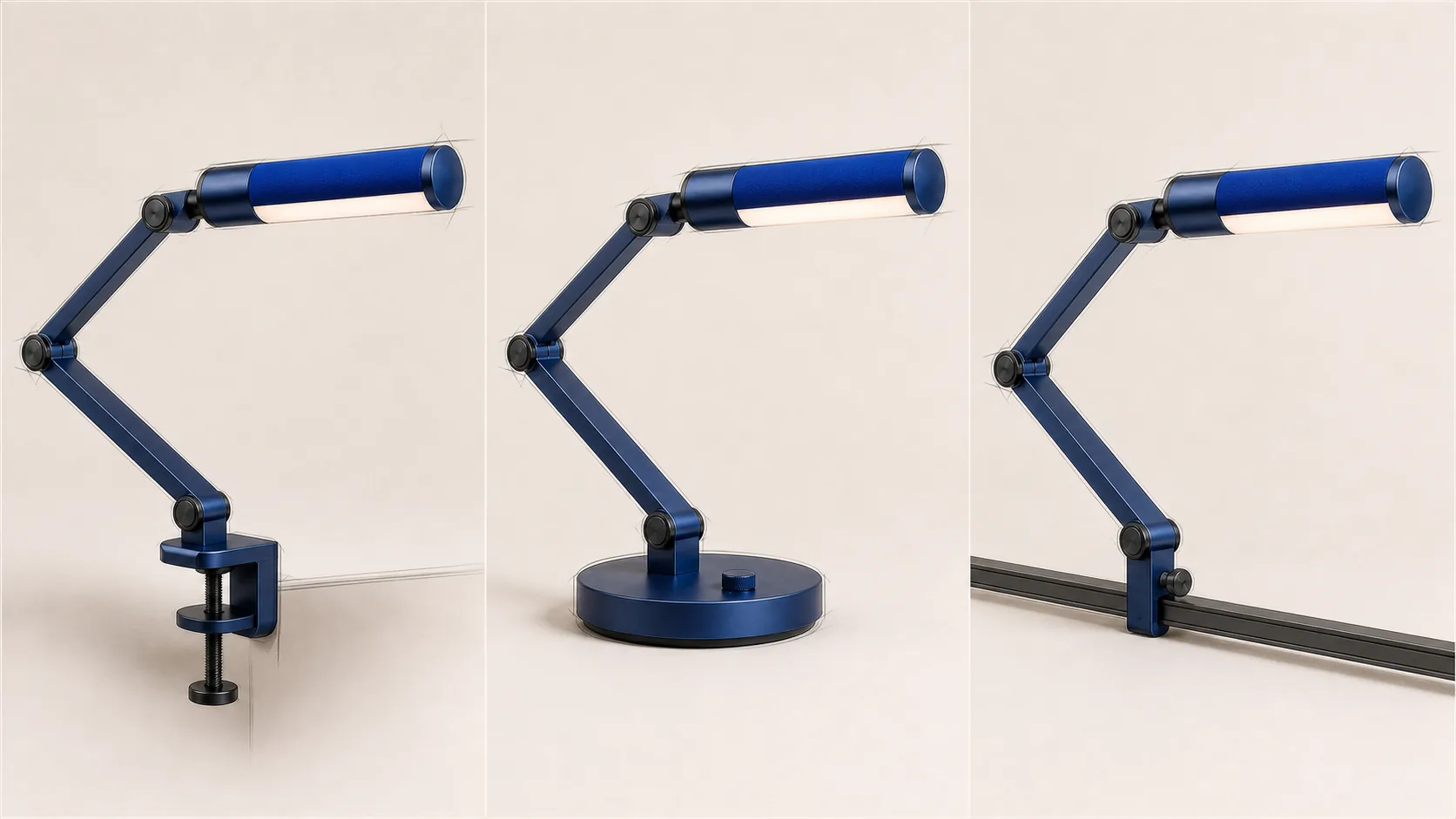
Concept route A with desk clamp mounting
A · Clamp route · Clears the work surface; limits portability.
Concept route B with circular weighted base
B · Weighted base · Portable and serviceable; needs stability study.
Concept route C mounted to a desk rail
C · Rail route · Flexible placement; depends on an ecosystem.

AI-assisted concept visualization · Not engineering evidence

ILLUSTRATIVE DECISION

Why carry the weighted-base route forward?

RoutePortableDesk accessService pathStatus
A · ClampLowHighMediumHold
B · BaseHighMediumHighExplore
C · RailMediumHighMediumHold

Concept decision: explore Route B because it makes the modular promise legible without requiring desk hardware. Criteria remain assumptions until tested.

FORM · CMF

Make adjustment feel precise, not mechanical.
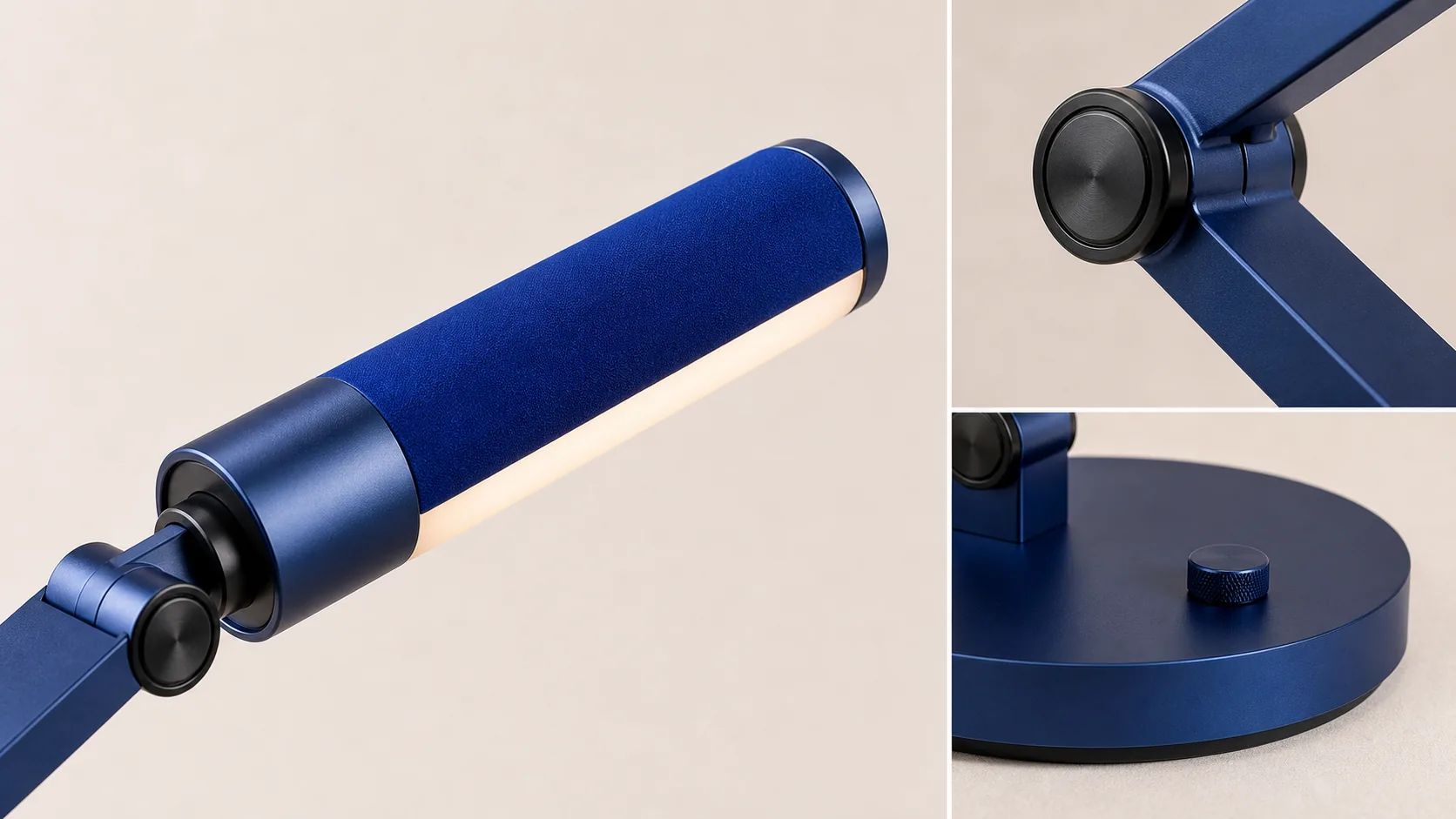
Close-up concept visualization of the lamp head, cylindrical joint, and base control
Concept intent · Cylindrical joints, tactile dial, replaceable sleeve.

Deep navy anchors the structure. A cobalt textile-like sleeve makes the replaceable light module visible. Warm opal light softens the technical geometry.

Concept CMF only · No material approval or supplier validation

AI-assisted concept visualization · Not CMF approval

CONCEPTUAL ARCHITECTURE

Separate the modules that age differently.
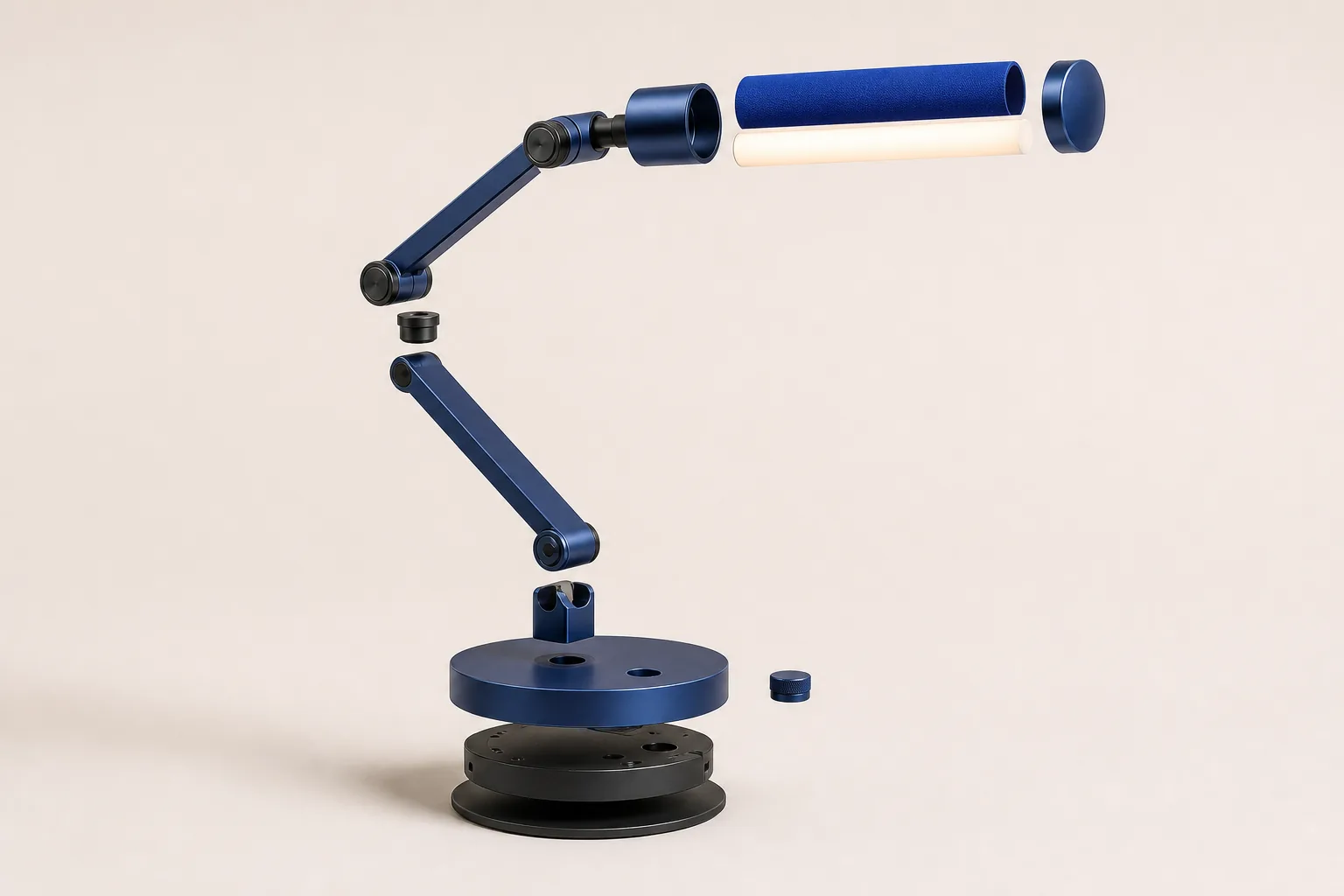
Exploded conceptual illustration of lamp head, arms, joints, base shell, and power module
Conceptual architecture illustration · Geometry and assembly remain unverified.
01 · LIGHT

Replaceable head, sleeve, diffuser.

02 · MOTION

Two arms with cylindrical joints.

03 · POWER

Base-contained concept module.

04 · SERVICE

Access path to validate with engineering.

AI-assisted concept visualization · Not engineering evidence

VALIDATION PLAN · NO RESULTS

Four questions for the first physical rig.
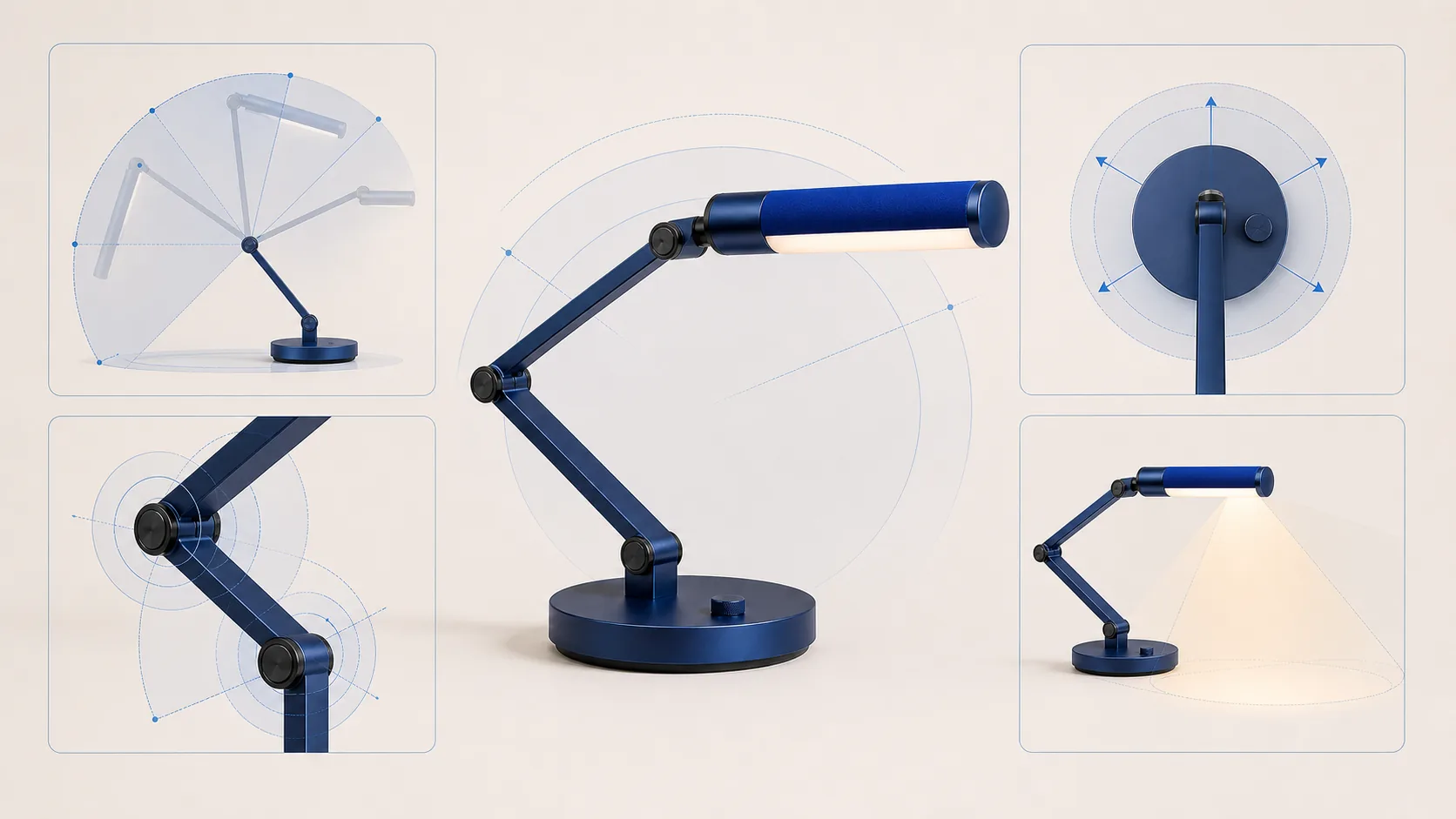
Concept validation-plan illustration showing reach, base stability, joint movement, and light spread
Future validation plan · No prototype or measured result exists.
REACH

Can the head cover intended work zones?

STABILITY

What base mass resists tipping?

EFFORT

What joint torque feels controlled?

GLARE

Which diffuser and angle protect sight lines?

AI-assisted validation-plan illustration · Not test evidence

ILLUSTRATIVE ITERATION

A proposed stability response—not a measured improvement.
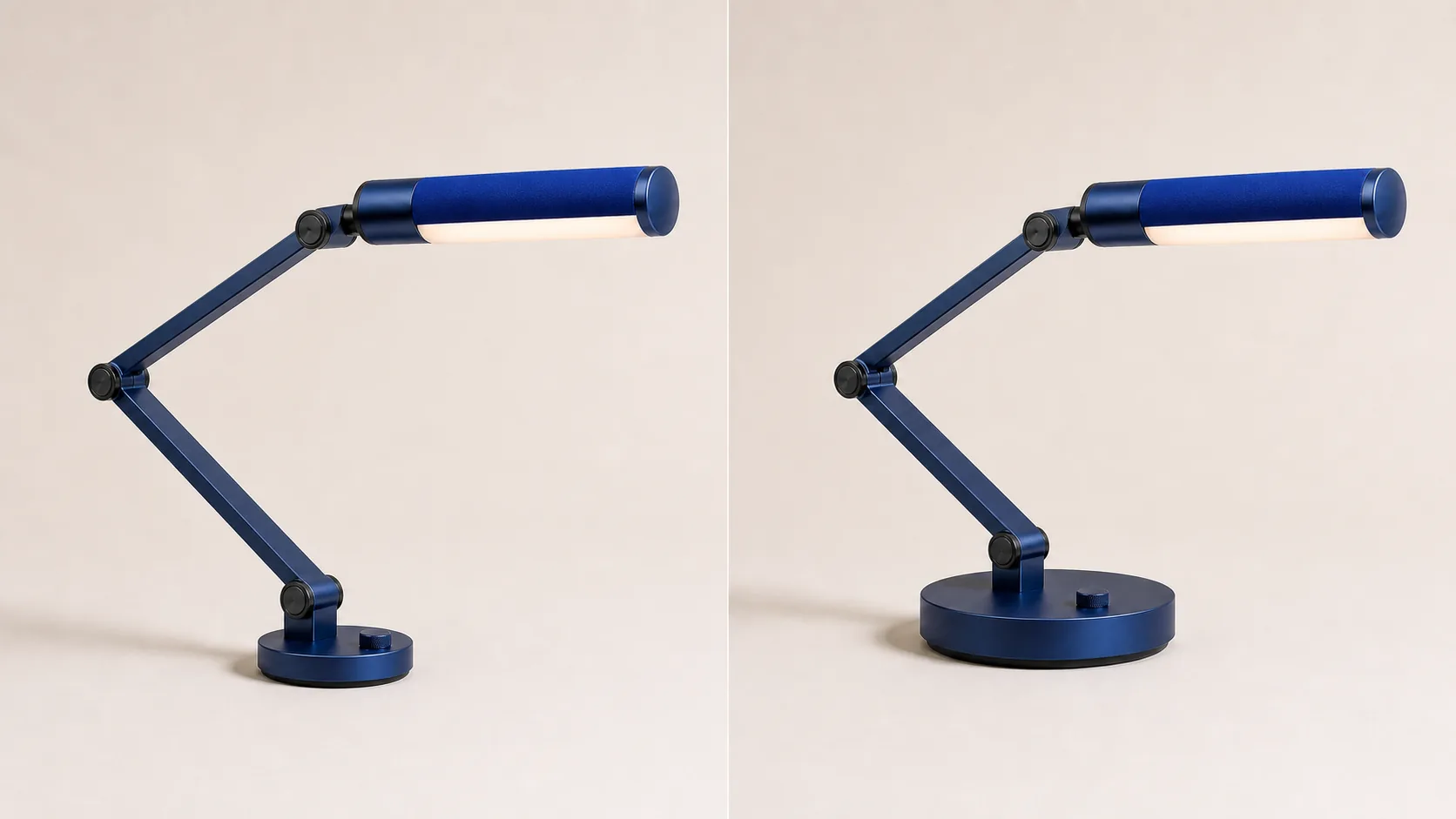
Earlier concept with narrow base and long lower arm
Before · Narrow base and long reach create a stability concern.
Revised concept with wider base and shorter lower arm
After · Wider base and shorter lower arm are proposed responses.

To validate: build matched rigs, document mass and reach, then measure the tipping boundary.

AI-assisted concept visualization · No physical test performed

FINAL CONCEPT RESOLUTION

One platform. Three possible modes. Many unanswered questions.
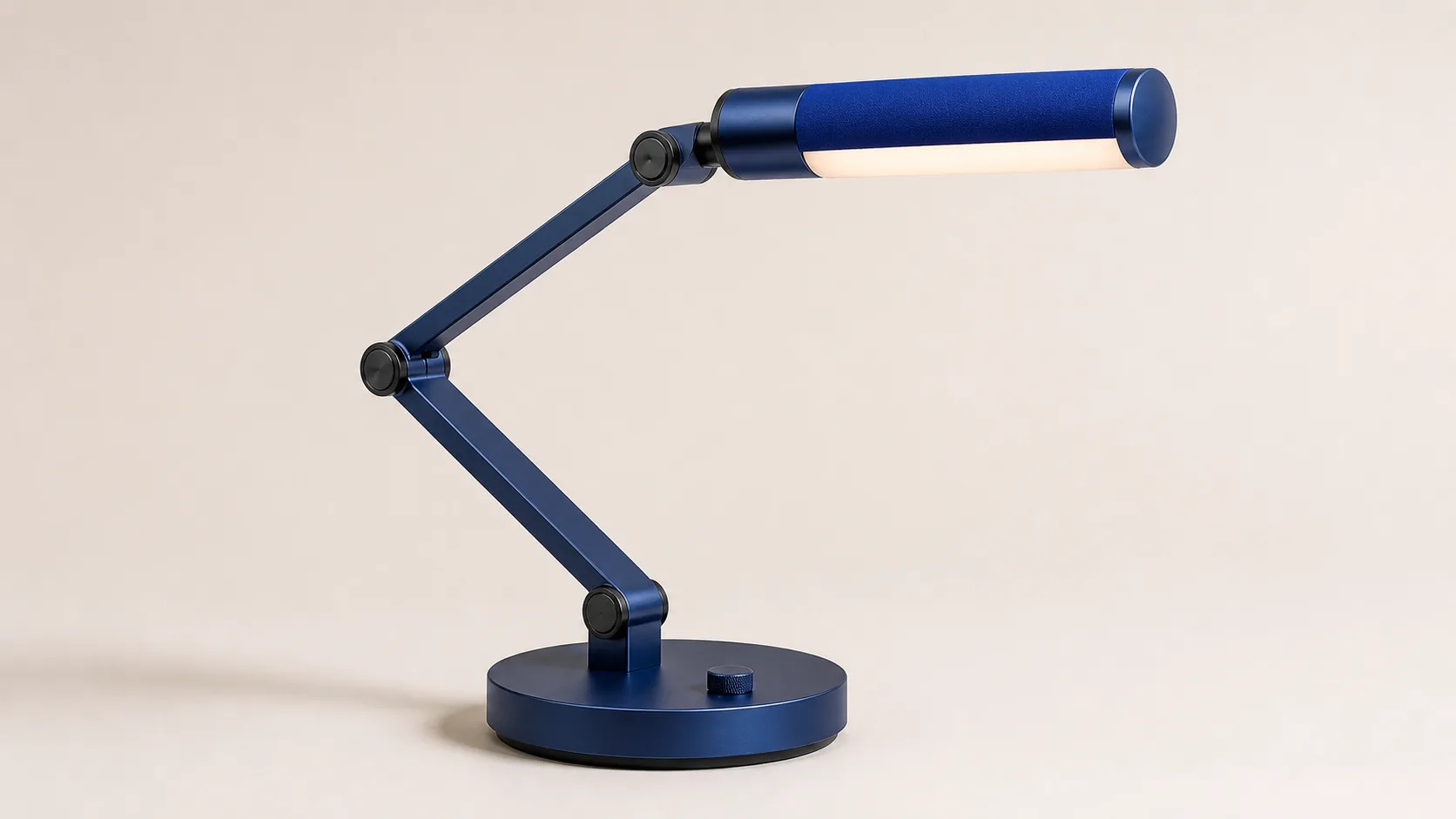
Final modular desk lamp concept with circular base, two articulated arms, and capsule light head
Concept resolution · Fictional Skill showcase · Not a prototype or production product.

AI-assisted concept visualization · Not engineering evidence

REFLECTION

The portfolio is honest when uncertainty stays visible.

DEFINED

A coherent modular concept and a clear validation agenda.

UNKNOWN

User value, ergonomics, optics, thermal behavior, cost, and assembly.

NEXT

Research, functional rigs, photometric tests, and engineering review.

A polished image can explain intent. It cannot raise an E0 assumption into evidence.

INDUSTRIAL-DESIGN-PORTFOLIO SKILL

Show the judgment. Label the unknowns.

PROJECT

Fictional demonstration

SOURCE

truman-t3 / industrial-design-portfolio-skill

STATUS

Public Skill Showcase · Not engineering evidence